

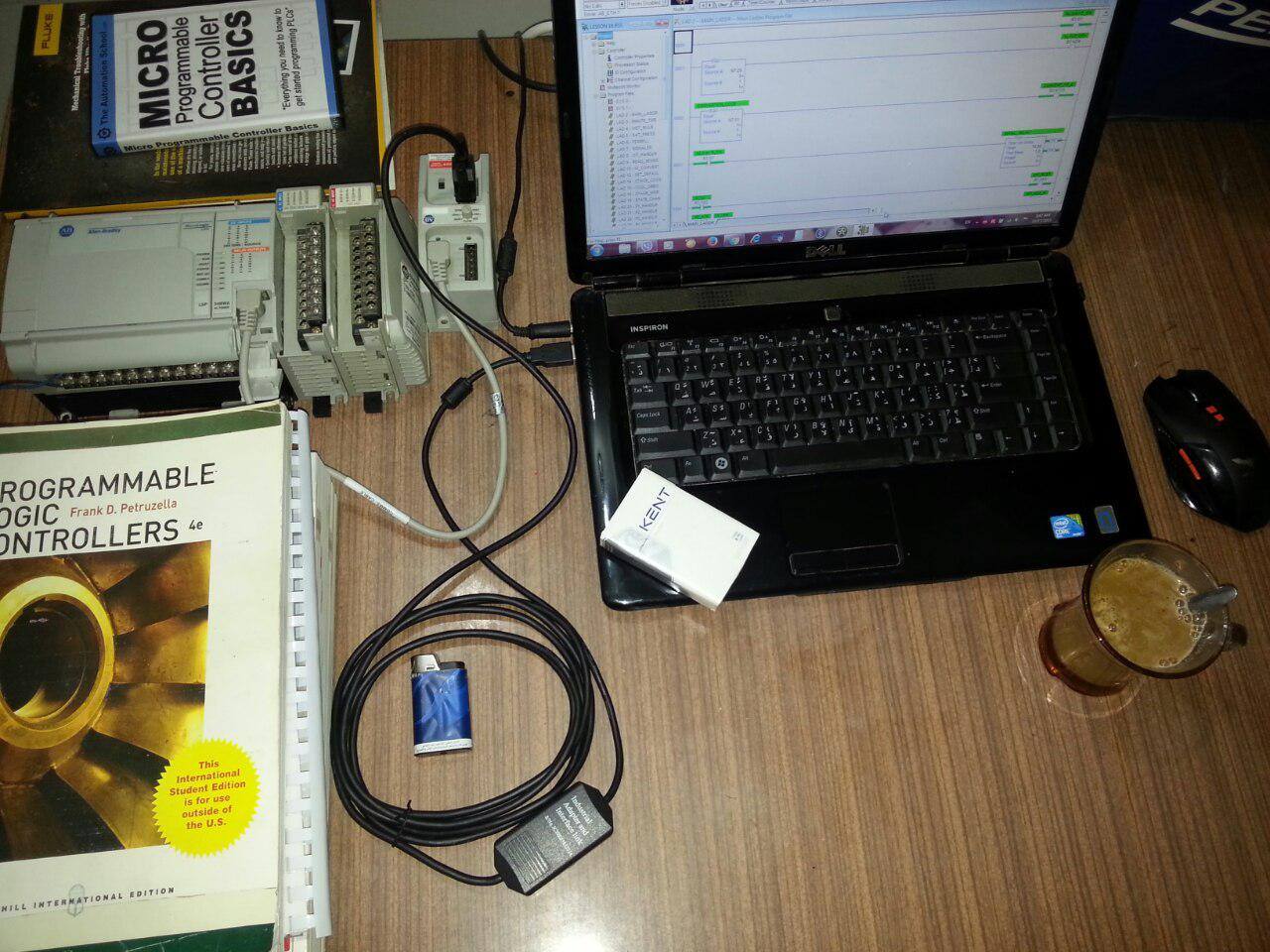
A Programmable Logic Controller (PLC) is a specialized industrial computer designed to control manufacturing processes, machinery, and automation systems. PLCs are widely used in industries such as manufacturing, power generation, oil and gas, water treatment, and building automation due to their reliability, flexibility, and real-time control capabilities.
What Is a PLC?
A PLC is a digital control device that continuously monitors input signals, executes a user-defined control program, and updates output signals accordingly. Unlike general-purpose computers, PLCs are built to operate in harsh industrial environments, with resistance to vibration, electrical noise, temperature extremes, and humidity.
Main Components of a PLC
- Power Supply
Provides the required operating voltage for the PLC and its modules. - Central Processing Unit (CPU)
The “brain” of the PLC. It executes the control logic, performs calculations, and manages communication with input/output modules. - Input Modules
Receive signals from field devices such as sensors, push buttons, limit switches, and transmitters. - Output Modules
Send control signals to actuators like motors, solenoid valves, relays, and indicators. - Memory
Stores the control program, configuration data, and operational values. - Communication Interfaces
Enable data exchange with HMIs, SCADA systems, other PLCs, and industrial networks (Ethernet/IP, Modbus, Profibus, etc.).
How a PLC Works
A PLC operates in a continuous cycle known as the scan cycle, which consists of:
- Input Scan – Reads the status of all input devices
- Program Execution – Executes the control logic step by step
- Output Update – Updates output devices based on logic results
- Housekeeping – Performs diagnostics and communication tasks
This cycle repeats within milliseconds, ensuring fast and predictable system response.
PLC Programming Languages
PLCs are programmed using standardized languages defined by IEC 61131-3, including:
- Ladder Diagram (LD) – Most common; resembles electrical relay logic
- Function Block Diagram (FBD) – Graphical blocks connected by signals
- Structured Text (ST) – High-level, text-based programming language
- Instruction List (IL) – Low-level, assembly-like language (deprecated)
- Sequential Function Chart (SFC) – Used for step-based process control
Advantages of PLCs
- High reliability and durability
- Real-time operation
- Easy troubleshooting and maintenance
- Flexible and scalable system design
- Reduced wiring compared to relay logic
- Long operational life
Applications of PLCs
PLCs are used in a wide range of applications, such as:
- Conveyor systems and material handling
- Motor control and VFD integration
- Fire alarm and safety systems
- Packaging and bottling lines
- Water and wastewater treatment plants
- HVAC and building management systems
PLCs vs. Traditional Control Systems
Compared to relay-based control panels, PLCs offer compact design, easier modifications, faster response times, and advanced diagnostics. Compared to PCs, PLCs provide superior reliability for continuous industrial operation.
Conclusion
Programmable Logic Controllers are a core technology in modern industrial automation. Their robustness, flexibility, and real-time performance make them essential for efficient and safe control of complex industrial processes. As industries continue to move toward smart manufacturing and Industry 4.0, PLCs remain a critical foundation of automation systems.